
Signs you need this
- • A renovation plan that requires walls or ceilings taken down to the studs before anything new can go up
- • Old lath and plaster throughout a room or unit that needs to come out before a modern rebuild, not just patched again
- • A general contractor or remodeler who needs the demo phase handled by a specialist before their crew starts framing or finish work
- • Concern about what is actually in the walls of a pre-1978 house before any tear-out begins
- • A pre-purchase inspection or renovation plan that has flagged old plaster or a suspect material needing testing before removal begins
Worcester Drywall & Plaster schedules demolition as planned work tied to a renovation timeline, not a reactive repair. The one exception is a pre-1978 building where materials need testing before demolition disturbs them; that testing step happens before, not during, tear-out.
This comes up most for general contractors and remodelers who need the drywall and plaster demo phase of a job handled cleanly before their framing, electrical, or finish crews start, for homeowners doing a gut renovation on a kitchen, bathroom, or whole floor who need old material out before the new layout goes in, for owners of Worcester’s pre-1940 three-decker and Victorian-era housing stock where original lath and plaster has to come out ahead of a full modernization, and for property owners converting or repurposing commercial space in the Canal District or Shrewsbury Street corridor who need existing partition walls demolished before a buildout.
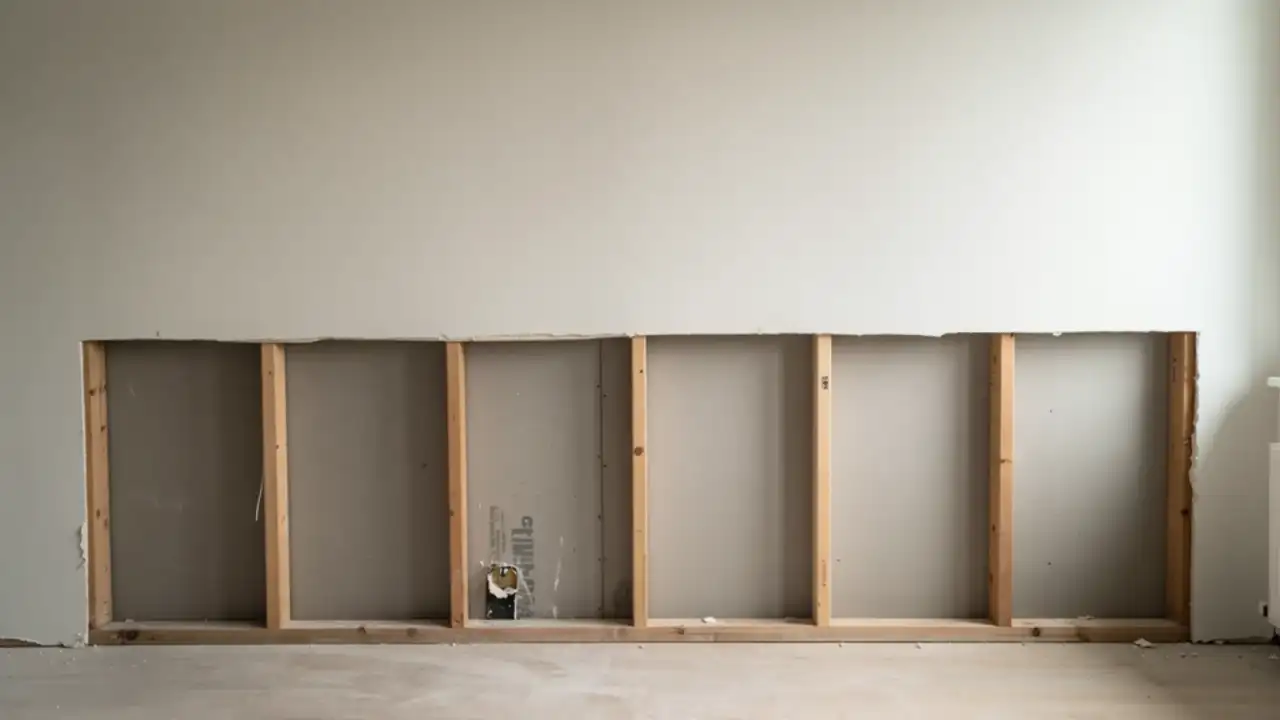
Worcester Drywall & Plaster tears out drywall, plaster, and lath cleanly and safely, whether that’s a single wall coming down to open a floor plan or a full room or unit stripped to the studs ahead of a gut renovation. On any pre-1978 building, that starts with testing for asbestos and lead before a single wall is opened, since older plaster, joint compound, and even some ceiling texture can contain either. Once cleared, work proceeds with dust containment, plastic sheeting, negative air where needed, so the rest of the home or building stays livable during demo, followed by full debris removal and haul-off so the space is ready for the next trade. This is the “before” of a renovation: getting a space empty, tested, and clean so framing, electrical, and new drywall can start without surprises.
Demolition Is the Foundation of a Good Renovation
Every gut renovation starts the same way: something old has to come out before something new can go in. It’s easy to treat this step as an afterthought, the messy part before the real work begins, but a demo phase done carelessly creates problems that follow the whole project, exposed hazardous material, damage to framing that should have stayed intact, or debris left behind that slows down the next trade. Worcester Drywall & Plaster treats tear-out as its own discipline with its own sequence, not just swinging a hammer until the wall is gone.
Why Worcester’s Housing Age Changes the Demo Plan
Worcester’s building stock skews old. The city’s dense three-decker neighborhoods, Vernon Hill, Grafton Hill, Main South, Green Island, and Union Hill, were largely built between 1880 and 1920, and the grand Victorian districts, Elm Park, Crown Hill, Montvale, and parts of the West Side, date to roughly 1870 through 1925. That means a meaningful share of demolition work in this city involves pre-1978 material, and pre-1978 is the line that matters under EPA RRP: plaster, joint compound, some floor tile mastic, and even certain ceiling textures from that era can contain asbestos, and painted surfaces can carry lead. Before any wall in a building of that age comes down, Worcester Drywall & Plaster tests the material rather than assuming, because disturbing asbestos-containing plaster without testing first isn’t a shortcut, it’s a hazard for everyone in the building afterward, including whoever moves in next.
Plaster and Lath Removal Is Its Own Job
Tearing out drywall and tearing out plaster and lath are not the same task. Drywall panels are large, lightweight, and come off framing relatively cleanly. Plaster is a different material entirely: three coats of hard-set material troweled over narrow wood lath strips, generating heavier debris, far more dust, and a slower pace of removal since the plaster has to be broken away from the lath, and the lath itself pried off the framing separately. Anyone budgeting a gut renovation of an older Worcester home should expect the plaster and lath phase to take meaningfully longer and generate more waste volume than the same square footage of drywall would.
Containing Dust in an Occupied Building
Most demolition in Worcester happens while the rest of the building is still occupied, whether that’s a homeowner living in one part of the house during a kitchen gut or tenants in the other units of a three-decker while one unit gets renovated. Worcester Drywall & Plaster contains the work area with sealed plastic sheeting over doorways and, on larger scopes, negative air setups that pull dust-laden air through a filter rather than letting it drift into the rest of the structure, similar in principle to the ICRA containment protocols used in healthcare renovation work at institutions like UMass Memorial Health, scaled to a residential or light commercial job. The goal is straightforward: the people not involved in the renovation shouldn’t have to live in a construction site.
Debris Volume and Haul-Off Planning
A full room or unit strip-out generates more debris than most homeowners anticipate, plaster and lath in particular is heavy and bulky. Planning haul-off in advance, rather than letting debris pile up mid-project, keeps the job moving and keeps the site safe to work in. In multi-unit buildings like Worcester’s three-deckers, that planning also has to account for stairs and tight access, since debris often has to be carried down two or three flights before it ever reaches a truck or dumpster.
Handing Off a Clean Site
For general contractors and remodelers, the value of a specialized demo crew is less about swinging the hammer and more about what’s left behind afterward. A framing crew, an electrician, or a plumber doing rough-in work needs a space that’s actually clear, not one with plaster dust settled into every surface or debris staged in a corner. Worcester Drywall & Plaster hands off swept, cleared space so the next trade on the schedule can start immediately rather than losing a day to cleanup that should have already happened.
Related Work
Asbestos and lead testing on any pre-1978 structure comes first, and Worcester Drywall & Plaster coordinates that testing as part of the demo scope. Framing, electrical, or plumbing rough-in follows, along with new drywall hanging and finishing once the space is opened up. A full plaster-to-drywall conversion is a common pairing when the tear-out is part of modernizing an older home’s walls and ceilings.
Materials & standards
Products & materials we use
- USG Sheetrock
- National Gypsum Gold Bond
- Georgia-Pacific ToughRock
Standards & codes we work to
- 780 CMR (Massachusetts State Building Code)
- EPA RRP (lead-safe practices)
- MassDEP
- ICRA
- EPA RRP Lead-Safe Certified Firm
- Massachusetts Department of Labor Standards asbestos requirements
- Massachusetts Construction Supervisor License (CSL)
What the terms mean
- Lath and plaster
- Gut renovation
- Tear-out
- Debris haul-off
- Dust containment
- Negative air
- Demising wall
- Asbestos-age testing
- Three-decker
Options & variants
| Option | When it applies | Cost |
|---|---|---|
| Single wall or partial demo | Opening a floor plan, removing one non-load-bearing wall | Lowest cost, contained scope |
| Full room strip-out | Gut renovation of a kitchen, bathroom, or bedroom | Mid-range, includes ceiling and wall removal |
| Whole-unit or whole-floor demo | Full gut renovation or three-decker unit turnover to studs | Higher cost, larger debris volume |
| Plaster and lath removal with asbestos/lead testing | Pre-1978 buildings where original plaster is coming out | Adds testing time and, if materials test positive, abatement coordination |
What affects cost
- • Square footage and whether it's a wall, a room, or a whole unit coming down
- • Whether the material is drywall (faster to remove) or old plaster and lath (more labor-intensive and dustier)
- • Whether asbestos or lead testing is required because of the building's age, and what that testing finds
- • Access for debris haul-off, including stairs in a three-decker or limited parking downtown
- • Whether any part of the wall is load-bearing or contains wiring, plumbing, or ductwork that needs coordination before removal
What to expect
- 1
Walk the space and confirm scope
Worcester Drywall & Plaster walks the space with the customer or general contractor to confirm exactly what's coming out and what's staying.
- 2
Test for asbestos and lead
On any pre-1978 structure, samples are tested for asbestos and lead before demolition starts.
- 3
Set up dust containment
Dust containment goes up (plastic sheeting, sealed doorways, negative air where the scope calls for it) to protect the rest of the home.
- 4
Remove material to the framing
Drywall, plaster, or lath is removed down to the framing, along with any old insulation or debris behind it.
- 5
Bag, bundle, and haul off debris
Debris is bagged or bundled and hauled off site, leaving the space swept and ready for the next trade.
- 6
Final walkthrough
Worcester Drywall & Plaster does a final walkthrough confirming the space is clear and ready for framing, electrical, or new drywall.
When this isn’t the right call
- If the goal is repairing a section of wall or ceiling rather than tearing it out entirely, a better fit is drywall repair and patching.
- If the plaster is coming out specifically to be replaced with new drywall as a conversion, not a full renovation, a better fit is plaster repair and conversion.
- If the wall or ceiling shows mold and the priority is remediation rather than a planned renovation tear-out, a better fit is mold and drywall replacement.
- If the damage is from an active leak and the material needs to come out because it is wet, not because of a renovation plan, a better fit is water damage drywall repair.
Frequently asked questions
Do you test for asbestos before removing old plaster? +
Yes, on any pre-1978 building. Worcester Drywall & Plaster tests plaster, joint compound, and related materials before demolition begins, since older material in Worcester's housing stock can contain asbestos or lead, and disturbing it without testing first is not something we do.
What happens to the debris? +
Worcester Drywall & Plaster bags or bundles removed material and hauls it off site as part of the job, so the space is left swept and ready for the next trade rather than piled with debris.
Can you demo just one wall without disturbing the rest of the room? +
Yes, single wall and partial demo is common for opening up a floor plan. Worcester Drywall & Plaster contains dust to the work area so the rest of the room or home stays usable.
I'm a general contractor. Can you handle just the demo phase and hand it back to my crew? +
Yes, this is a regular part of the work. Worcester Drywall & Plaster tears out and clears the space to studs, tests and documents as needed on older buildings, and hands off a clean, ready site for framing or finish trades to pick up.
How dusty is a demo job, and can I stay in the house? +
Plaster and lath removal in particular generates more dust than drywall alone. Worcester Drywall & Plaster contains the work area with sheeting and, on larger scopes, negative air setups, so the rest of the home stays livable during the project.
My three-decker unit has original plaster. Does that need special handling? +
Often, yes. Pre-1940 plaster in Worcester's three-decker stock is old enough to warrant asbestos and lead testing before removal, and Worcester Drywall & Plaster builds that testing into the schedule before any tear-out begins.