
Signs you need this
- • Hearing a neighbor's television, footsteps, or conversation clearly through a shared wall between units
- • Traffic noise from a busy corridor like Route 9 or Shrewsbury Street coming through a bedroom or home office wall enough to disrupt sleep or calls
- • A home office, theater room, or music space where sound leaks out into the rest of the house, or outside noise leaks in during calls or recording
This comes up most often for owners of three-decker units in Vernon Hill, Grafton Hill, Main South, Green Island, and Union Hill dealing with a party wall that transmits far more sound than expected, and condo owners with a demising wall shared with a neighboring unit where normal household noise carries through clearly. It’s just as common from homeowners near busy corridors like Route 9 or Shrewsbury Street whose bedrooms or home offices pick up traffic noise through exterior walls, and anyone setting up a home theater, music room, or a home office used for calls who wants sound contained to that room rather than carrying through the house.
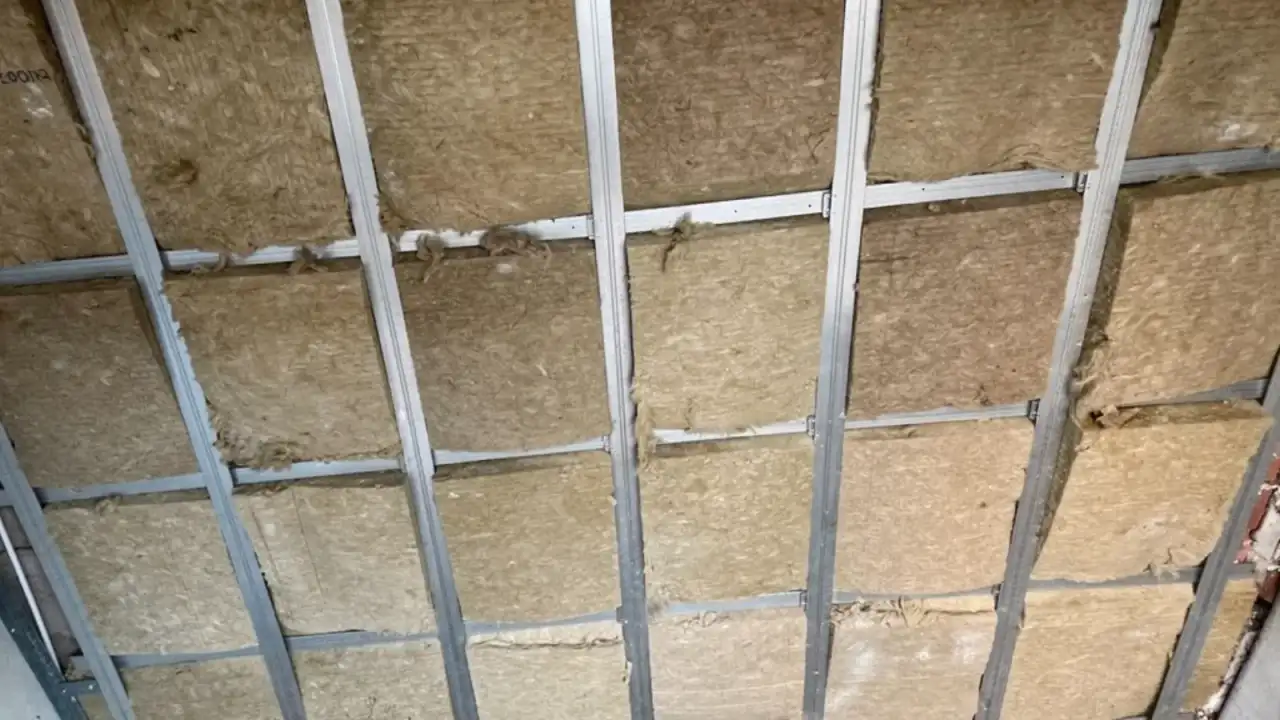
Worcester Drywall & Plaster builds sound-dampening wall and ceiling assemblies designed to reduce how much noise passes through a party wall, a demising wall, or an exterior wall facing a busy corridor. This means specific materials and construction methods, sound-rated gypsum board like QuietRock, Green Glue damping compound applied between layers of standard board, resilient channel that decouples the drywall from the framing, or a fully decoupled double-layer Type X wall, chosen based on how much sound reduction the space actually needs and what the existing wall assembly allows for. The goal is measured in STC rating, a standardized number for how much a wall assembly blocks airborne sound, not a vague promise of quieter.
Building a Wall That Actually Blocks Sound
Hearing a neighbor’s conversation through a shared wall is not a sign that the wall is broken. It is a sign that the wall was never built to stop sound in the first place. A standard interior partition, single layer of drywall on each side of wood studs, was designed for privacy from casual noise, not for blocking a television or a raised voice from an adjacent unit. Worcester Drywall & Plaster approaches soundproofing as a construction problem with a measurable target, not a vague upgrade, starting with what STC rating the space actually needs and working backward to the right assembly.
STC Rating: The Number That Actually Matters
Sound transmission class, STC, is the standardized measure of how much airborne sound a wall assembly blocks, and it is the number that separates a real soundproofing job from a cosmetic one. A typical uninsulated interior wall sits around STC 30 to 33, where normal conversation on the other side is easy to follow. Adding insulation alone nudges that up modestly. Real improvement comes from changing how the wall is built: decoupling the two drywall faces from each other, adding mass, or adding a damping layer that absorbs vibration instead of passing it through. Worcester Drywall & Plaster sets an STC target with the homeowner based on the actual noise problem, since a party wall issue with a chatty neighbor needs a different assembly than a home theater trying to keep bass from leaking into the rest of the house.
Three-Decker Party Walls: Worcester’s Signature Soundproofing Job
Worcester’s housing stock creates a soundproofing problem that shows up constantly: the party wall inside a three-decker. These wood-frame two and three-family houses, concentrated in Vernon Hill, Grafton Hill, Main South, Green Island, and Union Hill, were built between 1880 and 1920 with a shared wall separating adjacent units, often with minimal sound isolation by modern standards since the original construction never anticipated today’s expectations around privacy. Decades of ownership changes and unit turnovers rarely touched that wall’s construction, so a landlord or owner-occupant dealing with a noisy neighbor is usually looking at the same thin, undamped assembly the house was built with. Retrofitting this wall, adding QuietRock panels or a Green Glue and double-board layup without necessarily opening the wall to the studs, is one of the most requested soundproofing jobs in the city, precisely because it targets a well-known, specific weak point in a very common building type.
Condo Demising Walls and the Flanking Path Problem
Condo soundproofing carries an added wrinkle beyond the wall itself: shared structure. A demising wall between condo units often has the same basic construction issue as a three-decker party wall, but the noise complaint frequently traces back to more than just the open wall area. Sound finds the path of least resistance, and an unsealed electrical outlet box, a gap at the baseboard, or a shared duct running between units can undercut an otherwise well-built wall assembly. Worcester Drywall & Plaster treats these flanking paths as part of the plan from the start, sealing penetrations and addressing outlet boxes rather than only focusing on the open field of drywall, since a homeowner who spends real money on a sound-rated wall assembly and still hears a neighbor through an unsealed outlet loses trust in the whole project.
Route 9 and Shrewsbury Street: Exterior Noise Instead of a Neighbor
Not every soundproofing call in Worcester is about a shared wall. Homes and condos near busy corridors like Route 9 and Shrewsbury Street deal with a different noise source entirely: traffic passing outside. The construction approach for an exterior wall facing a road is similar in principle, sound-rated board, decoupling, added mass, but the honest conversation includes windows, since a heavily treated wall next to a single-pane or poorly sealed window still lets plenty of traffic noise through the weakest point in the assembly. Worcester Drywall & Plaster is upfront when a wall-only approach will underdeliver against an exterior noise source, rather than overselling drywall work as a complete fix for a problem that also needs window attention.
Choosing Between a Retrofit and a Full Rebuild
The practical decision on most jobs comes down to whether the wall can be treated without opening it to the studs. QuietRock panels and a Green Glue damping layer applied over existing drywall both deliver meaningful STC improvement without demolition, which matters in an occupied three-decker unit or a condo where a full rebuild means displacing a resident for longer than the noise problem justifies. A fully decoupled double-layer Type X assembly with resilient channel, built by opening the wall to the studs, delivers the highest STC improvement and is the right call for a home theater, a music room, or a party wall situation severe enough that a surface-level retrofit will not get the homeowner to a comfortable result. Worcester Drywall & Plaster walks through both paths with real STC expectations attached to each, so the homeowner is choosing based on outcome, not guessing at which option sounds more thorough.
Related Work
Soundproofing starts with an honest assessment of where noise is actually entering the room, since a wall treatment won’t help if the real path is a floor, ceiling, or duct. Interior painting finishes the rebuilt wall once the sound-rated assembly is taped and finished. This work is often combined with new drywall installation when a home office, theater, or music room is being built out as part of a larger renovation.
Materials & standards
Products & materials we use
- QuietRock
- Green Glue
- USG Sheetrock
- National Gypsum Gold Bond
- CertainTeed
Standards & codes we work to
- STC rating (sound transmission class)
- 780 CMR (Massachusetts State Building Code)
- ASTM sound transmission test standards
- Massachusetts Construction Supervisor License (CSL)
- Massachusetts Home Improvement Contractor (HIC) registration
- Manufacturer installer programs
What the terms mean
- Resilient channel
- Sound-rated Type X assembly
- Decoupled wall
- Double-layer drywall
- Damping compound
- Party wall
- Demising wall
- Flanking path
- Sound isolation
Options & variants
| Option | When it applies | Cost |
|---|---|---|
| QuietRock panel installation | Retrofitting an existing wall where opening up the full assembly isn't practical | Moderate to higher cost depending on panel product chosen |
| Green Glue damping compound between double layers | New wall or full assembly rebuild where two layers of board can be installed with damping compound between them | Moderate cost, strong sound reduction for the labor involved |
| Resilient channel with standard board | Decoupling the drywall from framing to interrupt sound transmission through studs | Moderate cost, common in party wall and demising wall retrofits |
| Fully decoupled double Type X assembly | Maximum sound reduction for a theater, music room, or severe party wall noise issue | Highest cost, most involved construction |
What affects cost
- • Target STC rating, since a modest improvement over an existing wall costs less than building toward a theater or music-room level of isolation
- • Whether the existing wall can be treated in place (adding QuietRock panels or damping compound over existing board) or needs to be opened to the studs for a full rebuild
- • Wall length and height, along with how many penetrations like outlets, switches, and vents need to be sealed as part of the sound path
- • Whether the ceiling also needs treatment, which applies in condo units with noise from the unit above as well as from the side
- • Access and whether the affected room needs to stay usable during construction
- • Whether flanking paths, sound traveling around the wall through floor, ceiling, or shared ductwork rather than straight through it, need to be addressed alongside the wall itself
What to expect
- 1
Assess the wall and noise path
Worcester Drywall & Plaster assesses the existing wall or ceiling assembly, identifies the noise source and path, and discusses a realistic target for sound reduction based on the space.
- 2
Select a construction approach
A construction approach gets selected, treating the wall in place with sound-rated board or damping compound, or opening it to the studs for resilient channel and a decoupled double-layer rebuild.
- 3
Address penetrations
Any electrical outlets, switches, or penetrations in the wall get addressed as part of the plan, since an unsealed penetration undercuts an otherwise well-built assembly.
- 4
Install the new assembly
The new assembly is installed, whether that's QuietRock panels, a Green Glue and double-board layup, or a resilient channel and Type X buildout.
- 5
Finish and review
The finished wall is taped, finished, and reviewed with the homeowner, who can generally tell the difference in daily use within the first few days back in the space.
When this isn’t the right call
- If the actual complaint is a structural or moisture issue in the wall rather than sound transmission, that points to standard drywall repair or water damage drywall repair, not soundproofing.
- If the noise is coming through flooring or a shared HVAC system rather than the wall itself, soundproofing the drywall alone will not solve it; that needs a flooring or HVAC contractor addressing the actual flanking path first.
- If the goal is simply a smoother, more finished-looking wall rather than sound reduction, that's skim coat and Level 5 finish, a different objective entirely.
- If a condo association restricts what can be altered in a shared wall, that conversation with the association needs to happen before any wall assembly work is planned.
Frequently asked questions
What's an STC rating and what number should I be aiming for? +
STC, sound transmission class, is a standardized rating for how much airborne sound a wall assembly blocks; higher numbers block more. A typical uninsulated interior wall sits in the low 30s, where normal speech is easily understandable through it. A well-built assembly with resilient channel or QuietRock can reach the mid-40s to 50s, where speech becomes muffled or inaudible. Worcester Drywall & Plaster talks through a realistic target based on the noise source and budget rather than quoting a number without context.
What is QuietRock and how is it different from regular drywall? +
QuietRock is a sound-rated gypsum panel that has damping material built into the board itself, so it reduces sound transmission without needing a separate double-layer assembly. It's a strong option for a retrofit where opening the wall to the studs isn't practical, since it installs similarly to standard drywall but performs closer to a more involved decoupled wall.
What does Green Glue actually do? +
Green Glue is a viscoelastic damping compound applied between two layers of drywall. As sound vibrates the wall, the compound converts that vibration into a small amount of heat instead of letting it pass through cleanly to the other layer, which meaningfully cuts sound transmission for a relatively modest material cost, especially in a double-layer wall.
I live in a three-decker and can hear everything through the wall to the next unit. Is this fixable without a full renovation? +
Often yes. Depending on what's behind the existing wall, Worcester Drywall & Plaster can sometimes add QuietRock panels or a Green Glue and board layup over the existing surface without opening the wall to the studs, which keeps the retrofit less disruptive than a full rebuild while still meaningfully reducing what carries through.
Will soundproofing one wall stop all the noise, or can sound get around it? +
Sound takes the path of least resistance, so if a wall is treated well but an outlet, a gap at the baseboard, or a shared duct is left untreated, noise finds that path instead. Worcester Drywall & Plaster addresses penetrations and flanking paths as part of the plan, not just the open wall area, since a great wall assembly with an unsealed electrical box underperforms.
Does this work for reducing outside traffic noise too, not just neighbor noise? +
Yes. The same principles, sound-rated board, damping compound, decoupling, apply to an exterior wall facing a busy corridor like Route 9 or Shrewsbury Street. Windows often matter as much as the wall for exterior noise, so Worcester Drywall & Plaster is upfront about the wall being one part of the picture if window upgrades aren't part of the project.
How much does adding resilient channel actually help? +
Resilient channel physically decouples the drywall from the wood or metal studs, so sound vibration in the studs doesn't transfer directly into the drywall surface facing the room. It's one of the more cost-effective upgrades in a wall being opened to the studs anyway, since it adds meaningful STC improvement without the material cost of a full double-layer buildout.