
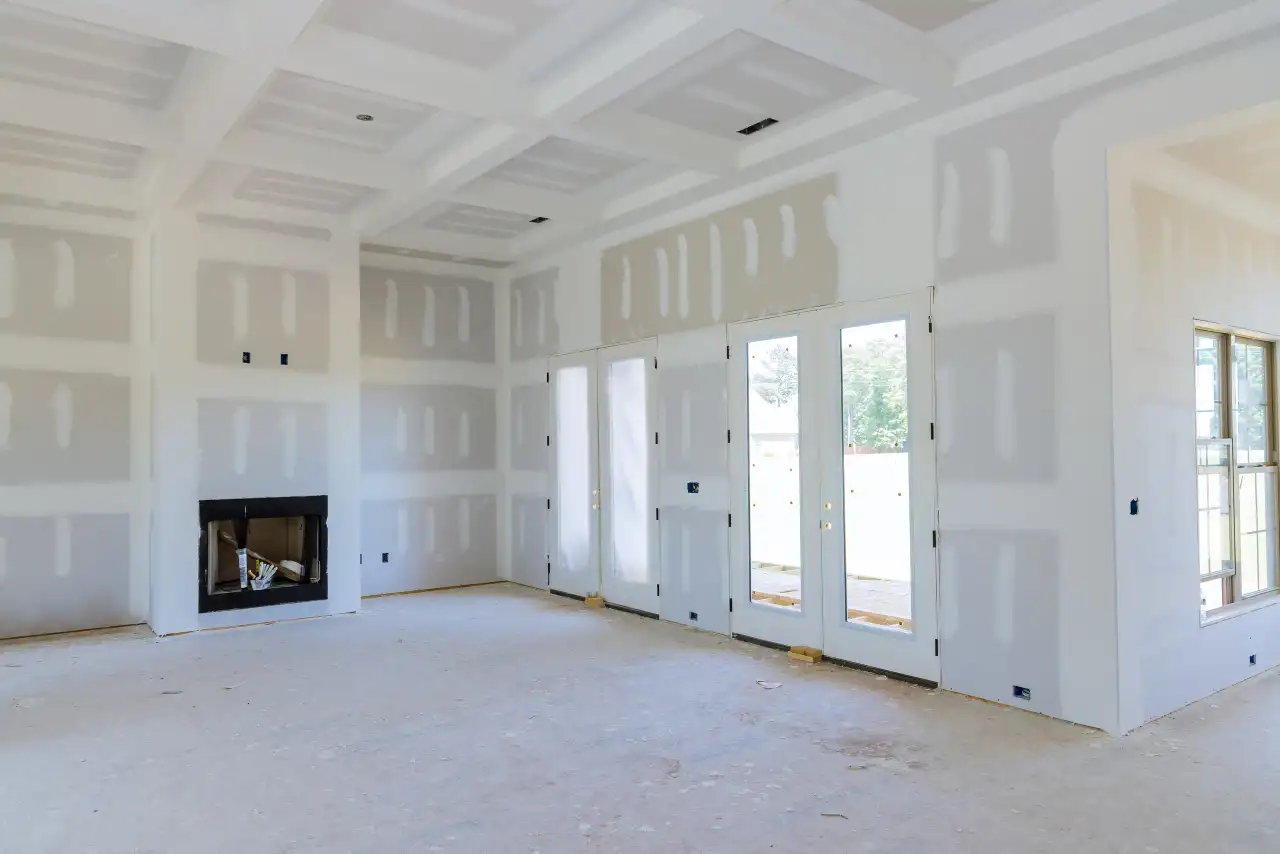
Signs you need this
- • Bare hung board with visible seams, screw heads, and butt joints, either from a DIY hang or a framing crew that only handles hanging
- • A GC or builder who has a hanging subcontractor but no in-house finish crew for the mud, tape, and sand phase
- • A homeowner who hung their own board over a weekend project and realizes the finish work is a different skill than the hang
Drywall taping and finishing serves general contractors and builders who subcontract out hanging and need a dedicated finish crew for mud, tape, and sand, alongside DIY homeowners across Worcester and the suburban ring who hung their own board and want a professional Level 4 or Level 5 finish before paint. It also covers property owners with newly hung board in an addition, basement, or remodeled room who need the seams and corners finished to a paint-ready surface, and builders on a schedule who need finish work sequenced tightly with the paint crew coming in behind them.
Worcester Drywall & Plaster takes drywall that is already hung and brings it to a finished, paint-ready surface: taping every seam and corner, applying joint compound in multiple coats, sanding smooth, and finishing to a specified level, typically Level 4 for most rooms or Level 5 where lighting and sheen will show every imperfection. This is the finisher-for-hire role, not the hanging job. The customer here already has board on the wall, whether hung by their own crew, a GC’s framing sub, or a DIY weekend project, and needs a professional to bring the surface to the finish quality the space calls for.
Finishing the Board That’s Already Up
Not every drywall call in Worcester starts with a bare stud wall. Plenty start with board already hung, by a GC’s framing sub, a homeowner’s own weekend project, or a crew that only does installation and subcontracts the finish. Worcester Drywall & Plaster takes over at that point: the hanging is done, and the job is turning taped seams and screw dimples into a smooth, paint-ready wall to a specified GA-214 finish level.
Reading the Hang Before Touching a Trowel
The first thing Worcester Drywall & Plaster checks on a finish-only job is the quality of the existing hang, because finish work can only be as good as what it’s covering. Proud fasteners, gapped seams, or boards that weren’t hung tight to the framing all need correcting before the first coat of compound goes on, otherwise those flaws telegraph straight through paint. This inspection step is part of why finish-only pricing depends on more than square footage; a poorly hung wall from a DIY project takes real prep time before it’s even ready for tape.
Paper Tape Versus Mesh Tape
Choosing the right tape for each joint is a decision that affects how the wall holds up over years, not just how it looks on day one. Paper tape, embedded directly into wet compound, gives a stronger mechanical bond and is the standard choice for butt joints and inside corners, where movement and stress are highest. Mesh tape, adhesive-backed FibaTape, goes on faster and works well on tapered factory edges, but it has to be paired with a setting-type compound rather than premixed joint compound, since mesh alone over regular mud is more prone to cracking. Worcester Drywall & Plaster picks the tape and compound combination joint by joint rather than using one method throughout.
Three Coats, Sanded Between Each
Finishing follows a deliberate sequence: an embedding coat that sets the tape, a wider fill coat that starts feathering the seam into the surrounding board, and a finish coat that brings the joint flush and invisible under paint. Each coat needs to dry fully before the next goes on and gets a light sanding pass in between. Skipping drying time to move faster is the single most common reason a finished wall shows seams or cracks a few months after paint, once the compound has fully cured and contracted.
Why Finish Level Matters to the Paint Result
A Level 4 finish, three coats over taped seams, is the standard for most rooms and holds up well under flat or eggshell paint, where the sheen doesn’t reveal minor texture differences. A Level 5 finish adds a thin skim coat of compound over the entire wall surface, not just the seams, which is worth the extra labor in rooms with glossy paint, strong side lighting from a window, or an accent wall where any difference in texture between the seam and the field of the board would catch light and show. Worcester Drywall & Plaster talks through paint sheen and lighting plans with the customer before finishing starts, since the right finish level depends on what happens after the primer coat, not just on the room itself.
The Finisher-for-Hire Role on a Job Site
For GCs and builders, having a dedicated finish crew that isn’t also hanging board means the finish schedule can move independently of the framing and hanging schedule elsewhere on a job. Worcester Drywall & Plaster works this way regularly, stepping in once hanging is inspected and complete, and handing off a primed, paint-ready surface to the builder’s paint crew without needing to coordinate the hang itself. For a homeowner who hung their own board, the same role applies: the DIY work stops at the stud-and-screw stage, and the professional finish picks up from there.
Related Work
Drywall taping and finishing follows directly behind drywall hanging or installation, which needs to be complete and inspected before taping starts. Priming and paint follow once the wall is finish-ready. Worcester Drywall & Plaster often combines this work with texture application, knockdown or orange-peel, when a customer wants a textured rather than smooth final surface.
Materials & standards
Products & materials we use
- USG Sheetrock
- National Gypsum Gold Bond
- FibaTape
- RedGard
Standards & codes we work to
- GA-214 finish levels (Level 0-5)
- ASTM C1396
- Massachusetts Construction Supervisor License (CSL)
- Massachusetts Home Improvement Contractor (HIC) registration
- Gypsum Association
- Manufacturer installer programs
What the terms mean
- Mud and tape
- Seam taping
- Corner bead
- Level 4 / Level 5 finish
- Joint compound
- Setting-type compound
- Knockdown and orange-peel texture
Options & variants
| Option | When it applies | Cost |
|---|---|---|
| Level 4 finish | Standard rooms with flat or eggshell paint | Baseline per-square-foot cost |
| Level 5 skim coat | Rooms with strong side lighting, glossy paint, or accent walls where flashing would show | Higher cost for the additional skim pass |
| GC subcontract finish (board already hung by others) | Builder needs a dedicated finish crew on their schedule | Priced per the GC's spec and timeline |
| DIY hang, professional finish | Homeowner hung their own board and needs it brought up to a pro finish | Priced on inspection of the existing hang quality |
What affects cost
- • Finish level required: Level 4 versus a full Level 5 skim coat, which adds a labor-intensive final pass
- • Quality of the existing hang: poorly hung board with uneven seams or proud fasteners takes more prep before finishing can start
- • Total linear footage of seams and corners, not just square footage, since taping is priced on joint length as much as wall area
- • Texture requirements, if the room is getting a knockdown or orange-peel texture instead of a smooth skim finish
- • Drying time built into the schedule, since compound needs to cure between coats and rushing it shows up as cracking later
- • Access and site conditions, particularly on a GC job where the finish crew is working around other trades still active on site
What to expect
- 1
Inspect the existing hang
Worcester Drywall & Plaster inspects the hung board, checks for proud fasteners, gapped seams, or framing issues that need addressing before taping starts.
- 2
Embed the first coat
Paper or mesh tape is set into the first coat of joint compound along every seam and corner, chosen based on the joint type and location.
- 3
Feather and finish coat
A second, wider coat feathers the tape line out, followed by a third finishing coat that brings the seam flush with the surrounding board.
- 4
Sand and inspect under raking light
The full surface is sanded smooth, dust is cleared, and the wall is inspected under raking light to catch any flashing or unevenness before it goes further.
- 5
Prime for paint
A primer coat is applied so the finish is ready for the customer's or GC's paint crew to take over.
When this isn’t the right call
- If the board isn't hung yet, that's a full drywall installation and hanging job.
- If the project involves framing a basement from scratch along with the finish work, that's basement drywall finishing.
- If the finish work is on the fire-rated wall or ceiling shared with an attached garage, the specific requirements are covered as garage drywall and fire separation.
Frequently asked questions
What's the difference between a Level 4 and Level 5 drywall finish? +
A Level 4 finish covers seams and corners with enough coats to be paint-ready under standard flat or eggshell paint. A Level 5 finish adds a thin skim coat over the entire surface, which is worth it under glossy paint, strong side lighting, or accent walls where any texture difference between the seam and the board would show.
I hung my own drywall, can you just do the taping and finishing? +
Yes, that's exactly this service. Worcester Drywall & Plaster inspects the existing hang first, since finish quality depends on how well the board was hung, then tapes, coats, sands, and primes to the finish level the space needs.
Do you use paper tape or mesh tape? +
Both, depending on the joint. Paper tape embedded in compound gives a stronger bond for butt joints and inside corners. Mesh tape (FibaTape) is faster to apply and works well for tapered seams, but it needs a setting-type compound underneath rather than premixed mud to avoid cracking.
How many coats of compound does a wall need? +
Three coats is standard: an embedding coat, a fill coat, and a finish coat, each sanded lightly between passes. A Level 5 skim adds a fourth, thinner coat across the whole surface.
Can you match the finish on an addition to my existing walls? +
Yes, Worcester Drywall & Plaster finishes new seams to match the texture and sheen expectations of the surrounding existing walls, whether that's a smooth Level 4 or a knockdown texture to match an older room.
How long does taping and finishing take? +
A typical room takes three to five days from first coat to final sand, since each coat needs time to dry before the next goes on. Rushing this step is the most common cause of visible seams after paint.